

deals with the devil
on The School of Night and minor demons in daily life

Revising a novel feels like experiencing a manic episode or a powerful crush: the world becomes sodden with relevant and perceptible meaning. Snippets of reading that would otherwise have slipped past unremarked upon reveal themselves to be links in the great chain of your plot. Your preferred text repository fills with notes. You do not need to sleep so much.
Since the novel I’m revising is about Faust, lately everything looks to me like the Faust myth. This whole thing, for instance, is obviously a Faustian situation. There’s the figure whose ambition surpasses human scale; there’s the minor demon, comic and fundamentally powerless, who passes along an offer from his boss; and there’s the Big Devil, behind or below him, choreographing the whole thing just to snare one more soul. As Caroline said, they’re all in a hell of their own making.
Faustus. Stay Mephistophilis and tell me / What good will my soul do thy lord?
Mephistophilis. Enlarge his kingdom.
Faustus. Is that the reason why he tempts us thus?
Mephistophilis. Solamen miseris socios habuisse doloris [Misery loves company].
The Marlowe play is often funny like this. You gotta be funny about the devil. That’s why there are two acts of basically comic relief stuffed into the middle, between when Faustus signs the deal and when Lucifer comes to collect. Otherwise: too much!
Every age gets its own Faust, Kierkegaard said. (Before he wrote anything of note he was working on a study of the character, but before he could publish, some other striving little Dane beat him to it.) What he meant was that there is a measure of poetic mystery in the myth, that it is a reflective shard wedged into the heart of human nature. Conceptions of selfhood and consciousness are not static, and the myth is capacious. It offers various answers to the question: what forbidden thing do we so badly want?
Marlowe’s Faustus wants a specifically worldly kind of knowledge. He also wants a divine knowledge to exist, somewhere, and wants simultaneously to surpass it and for it to be unsurpassable by human intellect. That is, he wants conflicting things. He’s inconsistent. He is a masochist and a coward and extremely human. He claims to not believe in eternal damnation, but the very first thing he asks Mephistopheles, once he’s signed the pact, is where hell can be found.
Hell is here, says Mephistopheles.
This is the point of the Faust myth. “Which way I fly is Hell; myself am Hell,” as Milton’s Satan says. There’s no such thing as a pact with the devil, but that doesn’t mean there’s no such thing as hell. The desire to surpass the limits of your life will make your life a hell. The idea that the scope of human life is limiting is itself hell.
When I inwardly seize with irritability at the prospect of putting down my book and taking my daughter out into the snow; when she wakes up half an hour earlier than I wanted her to and I, upstairs typing, close my eyes and pray for her to quiet down; when I lose my temper at my husband because I thought he was going to watch her so I could write, and now he wants me to take her to the Temu Chuck E. Cheese on Myrtle, because it’s six degrees outside and she needs to get some energy out, then I am making the choice that Faust made.
Not to be dramatic!
I don’t quite think that a Faust belongs to a given age. I think it belongs only to its maker. Marlowe was a lively and turbulent soul, and his Faust too is lively, furious, shallow, comic, covetous. Mann’s is inward and cold. Goethe’s not only cheats the myth and ascends to heaven but also makes a wager that mirrors the one God makes with Mephistopheles—he wants to play God and get away with it. (The poet’s last words—More light!—reflect this desire to improve upon what God has given.) The myth is just an extreme example of any work of fiction: in order to make it good, you have to reveal the most humiliating aspect of your nature, yet somehow without turning the whole thing into a psychosexual humiliation ritual. Tricky!
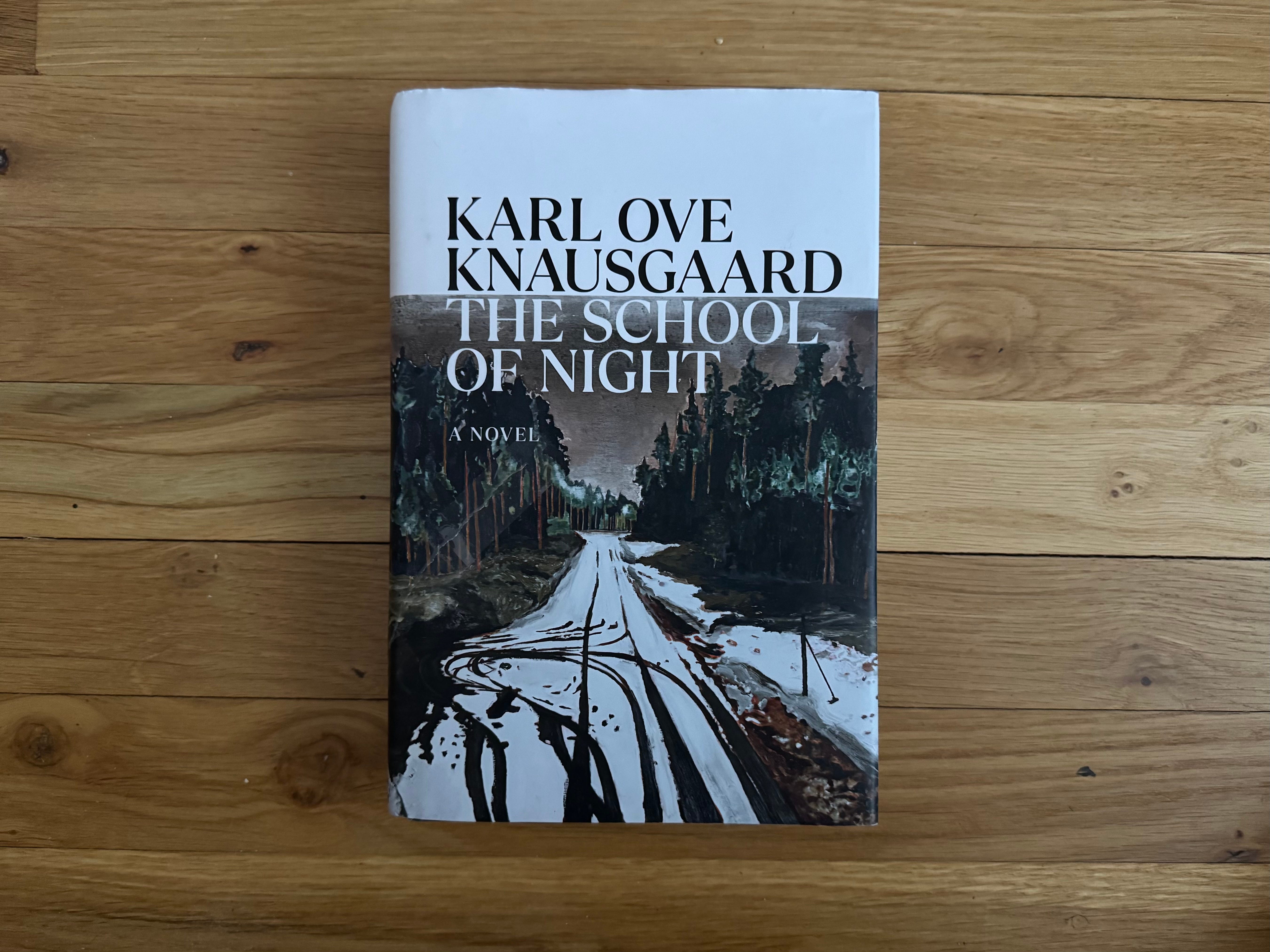
When I say I’m seeing Faust everywhere, I do mean also literally. Knausgaard’s latest novel, The School of Night, is an explicit Faust story. Unfortunately, it fails to maintain the essential balancing act of humiliation. Which is strange, because I know that Knausgaard can do it really well. Think of the scene in My Struggle where his future wife rejects him and he blacks out and cuts up his face in the mirror with a shard of broken bottle. In most other writers’ hands this passage would be unbearably sentimental and self-pitying. Even my synopsis is maudlin! But Knausgaard manages to skate over the surface of the text, somehow, too quickly for the sentiment to be deposited, and the passage works.
Possibly this is due to his compositional method, which (he has attested in interviews, and the schedule of his publication history also attests) involves basically no revision. If you’re writing about the saddest things that have ever happened to you, it’s best not to dwell before you send them out into the world. Everyone who has ever written a diary hoping that it will be read by other people knows this.
The School of Night appears to have been written following the same strategy; it was published in Norway in 2023, one year after the previous novel in the Morning Star series, The Third Realm. And while this is still three times slower than the publication cadence of the six volumes that made up My Struggle, it is still rather quick for literary novels, particularly ones that are five hundred pages long.
The text betrays this haste. It reads like a draft. The plot turns on several events of totally random fortune in the life of the Faust figure, a photographer named Kristian, a man even his mother calls a narcissist. When the novel opens, Kristian is a student in London whose ambition outpaces his abilities. He knows he’s not very good yet. He is, however, willing to work, both to hone his craft and to abase himself via networking, and these efforts pay off.
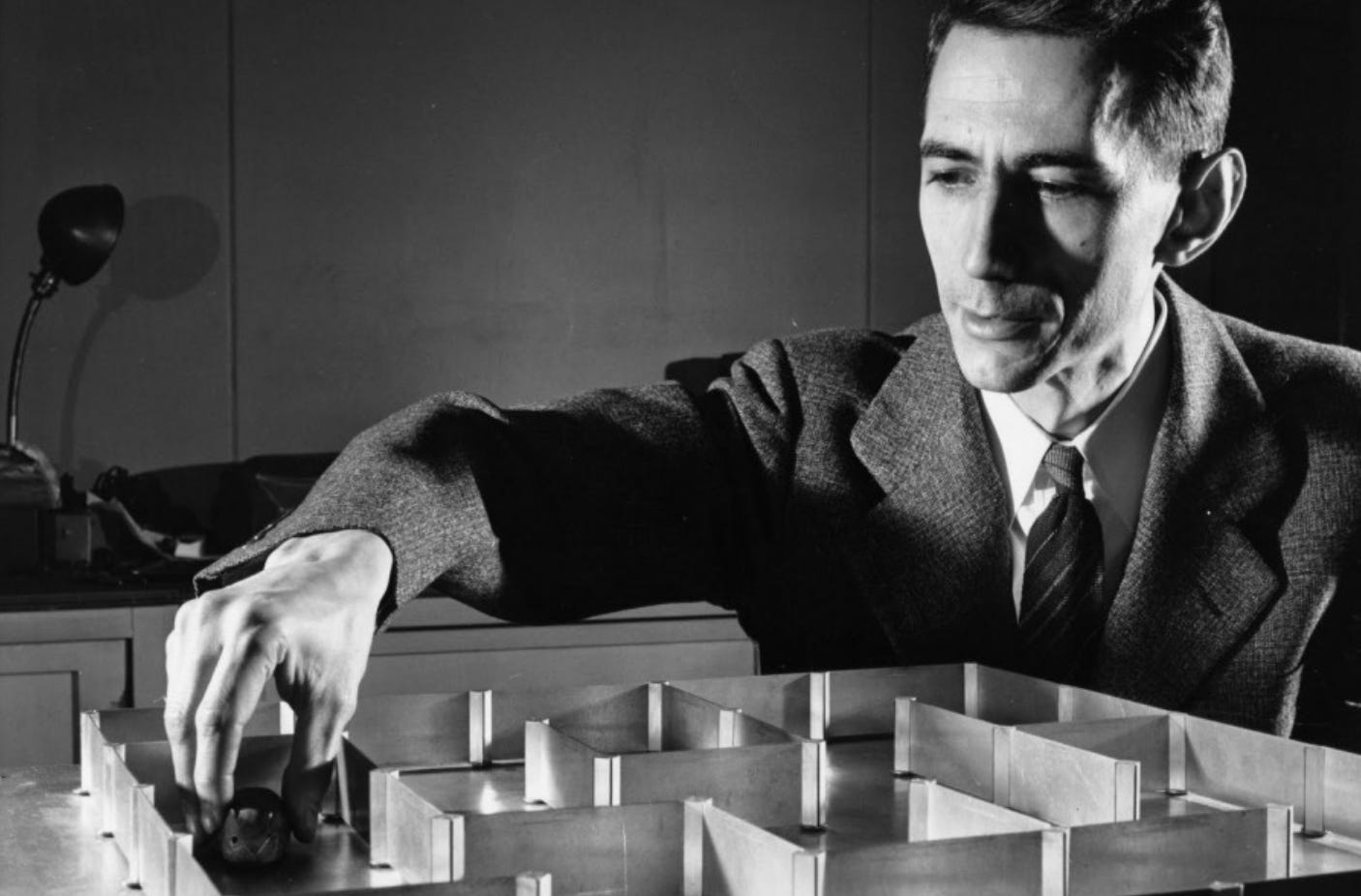
There is a Mephistopheles figure in the novel, an artist named Hans whom Kristian meets by chance at a bar, but there’s nothing to indicate that Hans is a supernatural figure, and his work isn’t very good. Hans once wanted to be a photographer, too, but gave up on the idea and now settles for creating primitive computers in the shape of turtles and rats. (More on this later.)
When a visiting photographer dismisses Kristian’s early photographs, he mopes for a few days, but the setback is immaterial. It isn’t long before he’s taken the photograph that will launch his career: the boiled carcass of a cat on a cutting board. This photograph will be included in his MoMA retrospective twenty-four years later, while everything else until that moment is forgotten as juvenilia.
You might think that this dead-cat photo therefore represents the first work Kristian completes after having made a deal with the devil, that the leap forward in aesthetic ability that it represents is made possible by the powers of hell. But no! There has been no deal. Kristian sporadically sees Hans, but Hans gives him no significant critique, no material support.
The event that seems intended to serve as the pact concerns a character who otherwise has no relation to the plot: Kristian encounters a homeless man on the street, who asks him for a cigarette; Kristian first says no, he only has two left, but is then struck by conscience, confesses that he has a full pack, and offers the man two; the man asks for Kristian’s lighter; Kristian hands it over; the man pockets it; Kristian tries to get it back and in the process knocks the man’s head against a brick wall, killing him.
The man, the cigarettes, the lighter, the way he dies—none of it bears any relation to Kristian’s ambition, or to any other character in the novel. He’s just there to die in symbolic fashion. Kristian later confesses what he’s done to Hans, and when Kristian is taken in by the police for questioning, it is Hans who makes the call that leads to his release.
So Kristian owes his literal freedom to Hans, and admittedly it would have been difficult for Kristian to have become a world-famous photographer while incarcerated, but Hans seems to have no influence upon the work that Kristian creates once he is freed. He’s a pretty shoddy Mephistopheles. He does appear at the novel’s end to tell Kristian, who has suffered the loss of his young son (sorry for the spoiler; it has no bearing on the rest of the novel), that he is now in hell.
But this is not a Faustian theme; any bereaved parent is in hell. The point of the Faust myth is that it is human nature to construct a hell of our own making, that our most fervent desires, if fulfilled, will cause us great suffering, and that we know this from the outset and pursue them anyway. In the Marlowe play, Mephistopheles is careful to warn Faust that “this is hell,” where they stand, before he makes the deal. And Faust accepts.
This is not the point of The School of Night. I’m not sure what the point is, beyond that killing someone is a stain on your soul, that secrets return to haunt you, that a child’s death is a tragedy, and various other straightforward moral lessons that offer no resonant tension.
I love this myth, it twists my heart, and I think it is a shame to waste it on this one-note character and this spastic plot. Oh well!
There is, however, a Faustian theme buried in the novel. It has to do with Hans’s “art”—the computers in the shape of little animals.
Kristian is scornful of Hans’s rat-computers, because his default and static attitude toward the world outside his mind is scorn. He is not a very Faustian figure after all. He has Faust’s ambition, yes, and the desire to master human knowledge and exceed human constraints, but he lacks the contrary curiosity, the force that makes Faust entertain Mephistopheles and sign his name in blood. Of course not, but what if—?
Knausgaard wrote memorably about organic computers in one of those mysterious Harper’s pieces funded by the John Templeton Foundation, which sponsors research in areas like “Character Virtue Development” and “Individual Freedom and Free Markets” and Jesus—three things I distrust, though I often love the resulting articles. (Thank you to Molly for pointing me in the direction of this one.) The piece is spectacular. It succeeds at the humiliation balancing act: it narrates a movement from one kind of ignorance to another kind that has been palpably enriched.
In the article, Knausgaard describes being seized by the distressing idea that although computers mediate nearly every aspect of his life, he has no idea what they actually are or do. He basically has never cared to learn. Suddenly this ignorance becomes intolerable to him; it feels like “serious neglect.”
There’s a moving passage where he describes how the garden outside his house in London is alien to him, in that he sees but does not perceive it, doesn’t make any meaning out of it, doesn’t relate it to his own existence. Then his brother comes to visit during a heat wave and waters a tree whose leaves, Knausgaard only then notices, have gone yellow and dry. He thanks his brother, “feeling a bit stupid” (Knausgaard is the world’s preeminent poet of feeling a bit stupid), and then forgets about the garden for many months. But the next spring, after a frost, he plants some new trees and flowers himself, and from then on he has a different relationship with the garden: he knows it and cares about it. Now it is full of meaning.
Knausgaard concludes from this experience that his alienation from technology is not due to any special quality of technology itself, that it results, instead, from his lack of knowledge about technology.
Knowledge, of course, is the Faustian theme par excellence; the historical Faust came to grief, so the story goes, because he sought for himself the knowledge that properly belonged only to God: black magic, necromancy. (In 1532, the burgomaster of Nuremberg denied entry to one “Dr. Faust, the great sodomite and necromancer.” Sick epithet!) Faust was a Renaissance figure: the historical Faust was born in the late fifteenth century and died in the early sixteenth. Before the mystery of life and death, medieval man bowed; Renaissance man sought to reason and experiment his way out of mystery altogether.
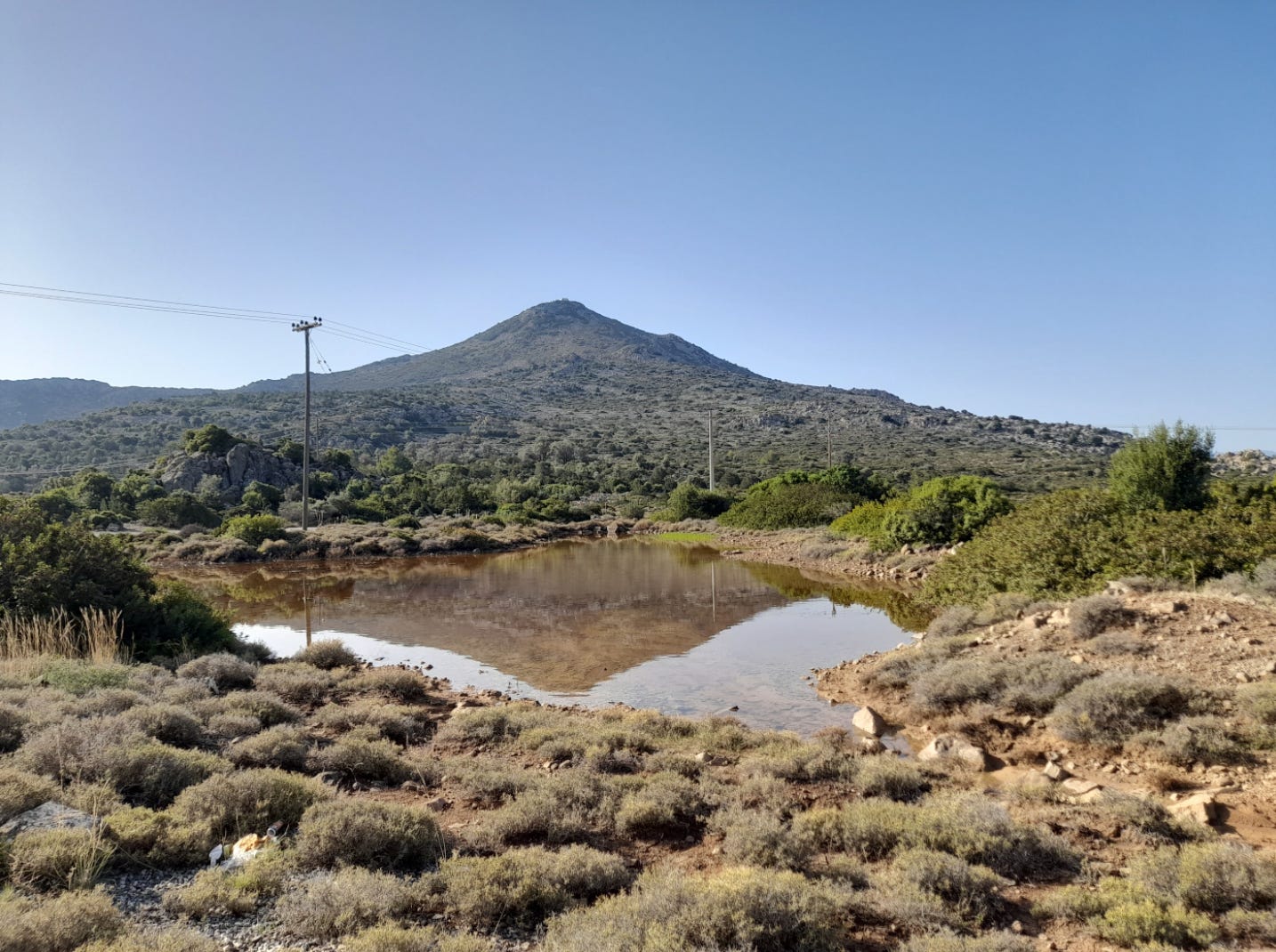
But Knausgaard doesn’t end up building computers to exert his mastery over them. Instead, he is drawn to the theories of a British writer called James Bridle, whose 2022 book, Ways of Being, is about nonhuman forms of intelligence. Bridle lives on Aegina, an island near Athens, and they invite Knausgaard to come visit. Knausgaard does so. Bridle and Knausgaard walk up a mountain together, and they talk.
What did you want to talk to me about? Bridle asks.
I don’t know, says Knausgaard. It just occurred to me that I don’t know anything about computers.
I see, says Bridle.
They reassure Knausgaard that computing is not a mystery, that it’s just a process of prediction—in fact, the opposite of a mystery, which is by definition what is unpredictable. Developing “a feeling of competence in the face of very complex systems,” Bridle says, can reduce the feeling of helplessness and alienation Knausgaard professes.
But that feeling of mastery is not in itself satisfying, not fully. Knausgaard maintains that he “feels like something is missing in my life…like I’m living in an abstraction.” That learning how to code, or whatever, is not going to fix it.
“Every time you’re not grounded in the world,” Bridle replies, “you feel loss: it has been lost.” Unfortunately he goes on to extol the virtues of taking ayahuasca, but if you can push past that for a moment, he then falls into inarticulacy, which is itself a better answer. He talks about the Eleusinian mysteries in ancient Greece, in which initiates were taken into a cave, exposed to sensory impressions without explanation, and then brought back the following year to introduce the next crop of initiates to the same stimuli, again without interpreting them. The mystery does not reside in the sensory impressions. It resides in the inarticulacy. The mystery “is unsayable,” says Bridle, and the misfortune of our time, the era that began with the Renaissance, “is that science doesn’t believe that what is unsayable is real.”
To deny the reality of what is beyond human articulation, to say that if we can’t conceive of it and put it into language it doesn’t matter, makes us unhappy. It is very human to want to conceive of it anyway, to put it into language anyway—at least it’s human in the way I recognize, because I live in a post-Renaissance world, a Faustian world. There was no Faust play in ancient Greece. Faust is born when human nature stops tolerating mystery.
A computer is an engine of predictability. What Bridle wants to do, which Knausgaard finds so moving, is to introduce randomness into the process of computing, to pair it generatively with organic processes, to make it a little bit alive.
Knausgaard takes the ferry back to Athens and then flies home to London, “while everything I had seen and heard out there on the Greek island slowly sank into the silt of memory, to be retrieved again intermittently in the months that followed.” It seeps into his novel, which means it seeps into the world, which has become sodden with meaning.
The organic computers, machines that retain some of the organic unpredictability of life, stay with him. He puts them in his novel, where they become a plaything for the devil.